
You're standing at the mirror with the invite in one hand and the skirt on the bed, and the problem isn't whether tartan looks right. The question is whether you've got the right wool tartan skirt for the occasion, the fit, and the amount of wear you'll get out of it. Treat it like a proper Highland garment, not a novelty buy, and it pays you back every time you reach for it.
The right moment for a wool tartan skirt is usually not a fashion moment at all, it's a practical one. A mother packing for a wedding, a dancer dressing for a games day, or a buyer comparing two skirts online all faces the same choice, whether this is a throwaway purchase or a garment worth keeping. Make the second choice. The cloth and construction have real Scottish and British precedent, and that matters because a skirt built from proper tartan behaves like a structured garment, not printed costume.
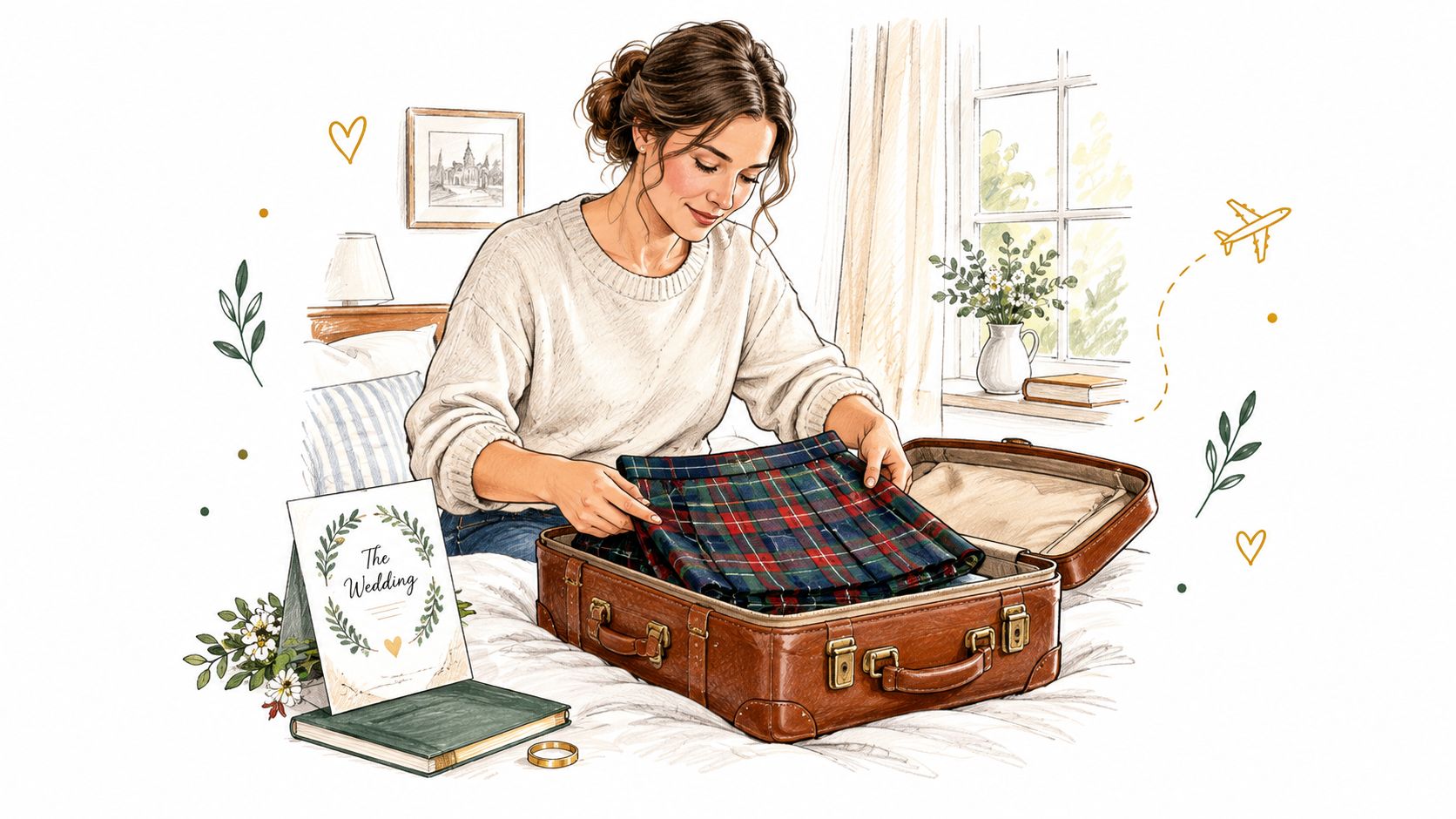
National Museums Scotland records tartan as a fashion fabric in Georgian Britain, used in women's cloaks, gowns, and children's clothing, and notes that its popularity expanded through regimental and royal adoption in the nineteenth century. That history matters because a wool tartan skirt sits inside a long clothing tradition, not a modern Highland novelty. The same dense woven construction that made tartan useful for outdoor garments also explains why it still works so well for durable lower-body wear today. You can read that heritage directly in the cloth, not just in the pattern.
If you're shopping now, think in four decisions, not one. First, the cloth weight. Second, the fit route, because made-to-measure, off-the-peg, hire, and blend fabrics all behave differently. Third, the occasion, because a wedding guest and a race day outfit do not need the same skirt. Fourth, the care plan, because wool deserves upkeep, not guesswork. If you get those four right, the skirt earns its place in the wardrobe instead of collecting dust.
Practical rule: buy the skirt for the occasions you genuinely attend, not the fantasy version of your calendar.
Scottish wedding traditions show how strongly tartan still belongs in formal dress culture, and that's exactly why a wool tartan skirt should be chosen with care. It's not a trend piece. It's a structured, symbolic, reusable garment, and that's why it's worth getting right.
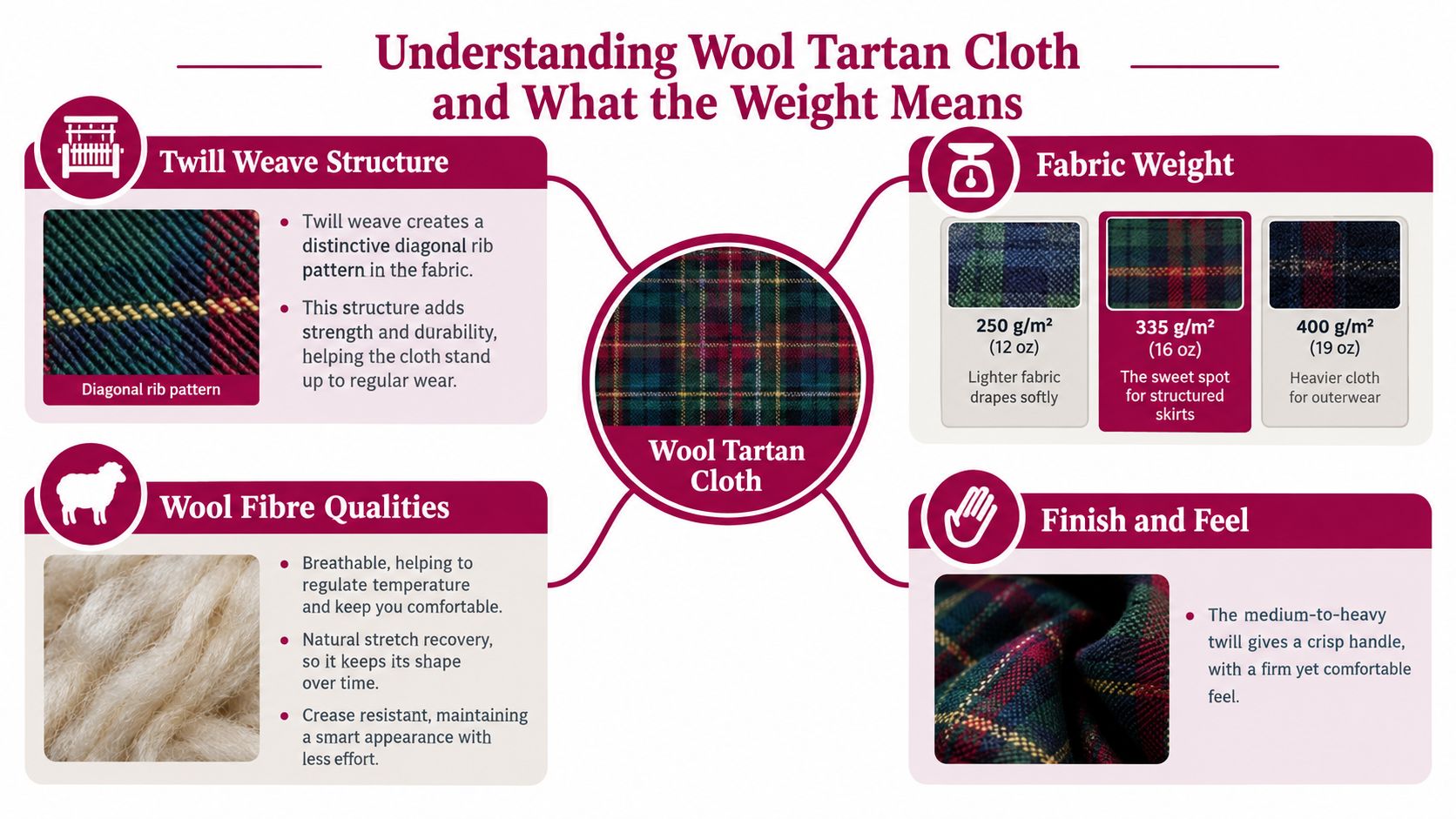
A good wool tartan skirt starts with the cloth, not the cut. For a structured skirt, I want a medium-to-heavy twill wool because the weave gives the fabric backbone, keeps pleats behaving, and stops the garment collapsing after a few hours of wear. A representative Scottish tartan specification lists 100% wool, twill construction, and a nominal mass of 335 g/m². That's the benchmark to ask for when you're buying for formal or repeated wear. Marton Mills' Scotland's National tartan cloth specification is a useful reference point because it shows exactly what a serious skirt cloth looks like.
Twill weave matters because the diagonal structure gives stability and helps the skirt hold its shape. Heavier cloth resists creasing better, sits more opaquely on the body, and tolerates abrasion better than light tartan. That makes a real difference when you sit through a ceremony, stand at a reception, or travel with the skirt folded in a bag.
A wool tartan skirt should keep its line after hours of wear. If the cloth goes limp immediately, it's too light for the job.
The other decision is whether you're buying woven tartan or a printed version. Woven tartan gives you proper pattern depth and cleaner visual continuity, especially where the pleats and seams meet. Print can look acceptable from a distance, but it doesn't give the same cloth behaviour, and it rarely feels convincing in a structured skirt.
Ask three plain questions. Is it woven tartan, or printed? What is the cloth weight? How has the tartan repeat been handled across seams and pleats? Those details matter more than marketing language because two skirts can both be called wool tartan and still hang very differently.
For a closer look at cloth options, the Lochcarron 13oz medium-weight tartan cloth listing is useful for understanding how proper tartan cloth is presented when a retailer takes the fabric seriously.
A wool tartan skirt is only as good as the fit route behind it. The right choice depends on your body, your timeline, and how often you'll wear the garment. I'm blunt about this, because people waste money by buying the wrong route for the wrong reason.
| Route | Fit accuracy | Lead time | Best for |
|---|---|---|---|
| Made-to-measure | Highest | Longer | Clean waist fit, correct length, formal wear |
| Off-the-peg | Good if your proportions are standard | Short | Fast purchases and reliable everyday use |
| Ex-hire resale | Variable | Immediate | Budget buyers and one-off events |
| Polyviscose or blend | Depends on cut | Short | Easy care and lighter handling |
Made-to-measure is the cleanest answer if the skirt needs to sit well at the waist and fall properly over the hips. It's the route I'd choose for weddings, formal clan events, or any skirt you plan to keep for years. The trade-off is price and patience, and those are real trade-offs.
Off-the-peg is the sensible middle ground. If your waist and hip proportions are fairly standard and the length works, it's the fastest route to a skirt that still looks intentional. Ex-hire can be good value, but don't kid yourself, it's a serviceable option, not a forever one. Polyviscose or other blends solve a different problem entirely, because they prioritise easier care over the natural handle and behaviour of wool.
Direct advice: if you need the skirt for a wedding, don't gamble on a loose fit and “good enough” alterations. Start with the route that already suits your measurements.
If you're weighing fit the way brides do, it helps to think in the same disciplined way people do when they compare plus size wedding dress options. The principle is the same, fit first, styling second. I'd also note the size gap, many ranges still stop before proper plus sizing, so check that before you fall in love with a tartan that won't be offered in your size.
A wool tartan skirt can go two ways. You can dress it as full Highlandwear, or you can let it work as a strong pattern in a modern outfit. Both are valid. Mixing the two badly is what makes people look overdone.
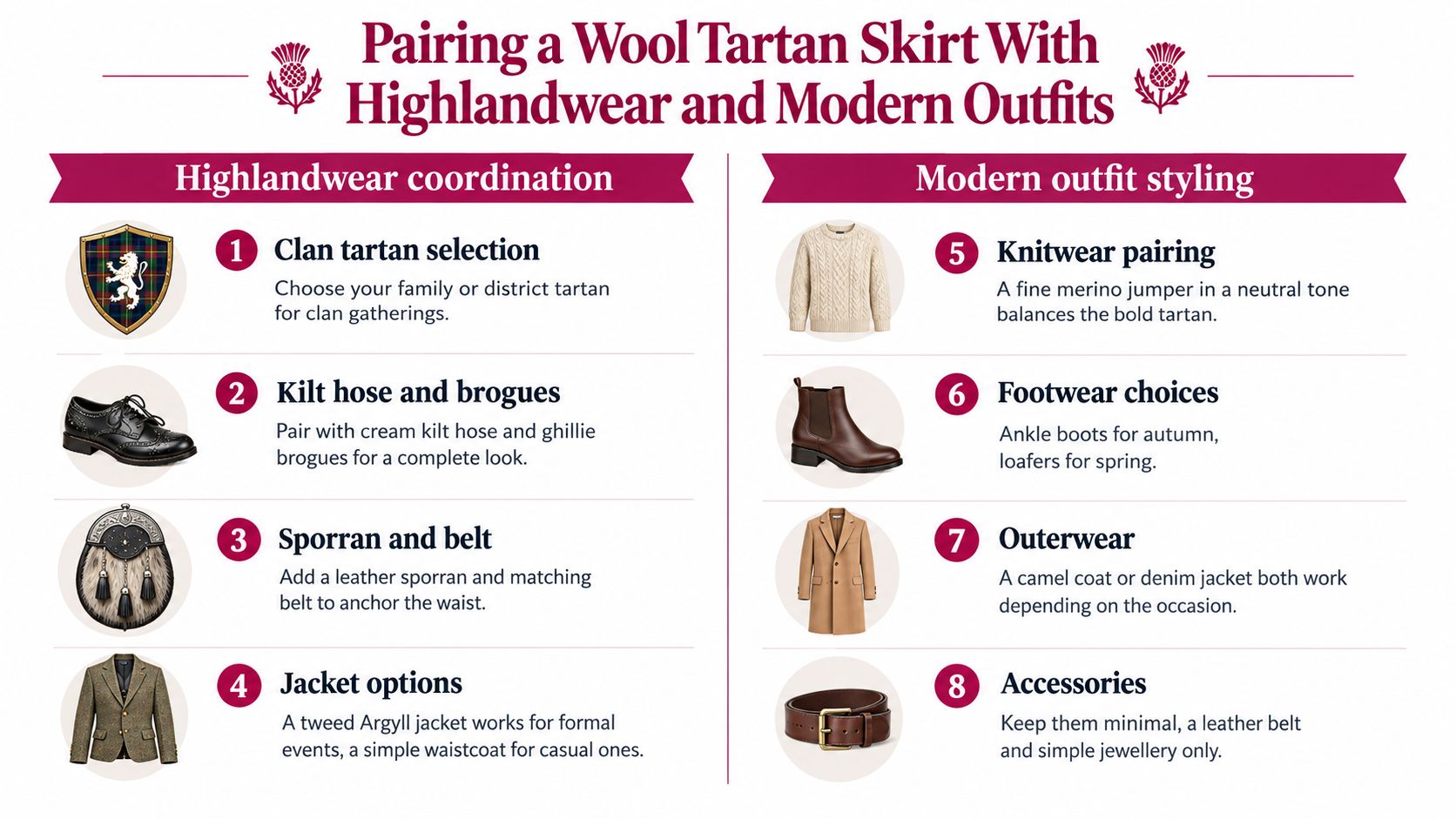
If the skirt is being worn for a clan or formal Scottish occasion, keep the rest disciplined. Let the tartan speak first, then add the pieces that belong there. A sporran and matching belt anchor the waist. Ghillie brogues and kilt hose finish the look properly. A tweed jacket works when the event asks for more structure, while a simple waistcoat is enough when the setting is softer.
For tartans tied to family or district identity, choose with intention. If the event is about heritage, don't dilute it with accessories that fight the cloth. A busy skirt needs calmer companions, not more decoration. For help with hair and finishing pieces that stay in Highland territory without overcomplicating the outfit, tartan hair accessories are an easy place to keep the styling restrained.
Away from formal Highlandwear, keep the skirt as the focal point. A fine merino jumper in cream, navy, charcoal, or another quiet tone works far better than another strong pattern. Add Chelsea boots in autumn, loafers in spring, or a plain shirt and blazer when the occasion needs polish. A camel coat or denim jacket can both work, but only if the rest of the outfit stays quiet.
Four combinations that are hard to get wrong:
The rule is simple, don't build a second pattern on top of the tartan unless you know exactly why you're doing it. One strong textile is enough.
A wool tartan skirt is a strong event garment, but it isn't right for everything. I'd wear it gladly to Highland weddings, christenings, funerals, clan gatherings, Highland games, Burns Night, graduation, smart office dress codes, race days, and December parties. Those are exactly the places where tartan looks intentional rather than decorative.
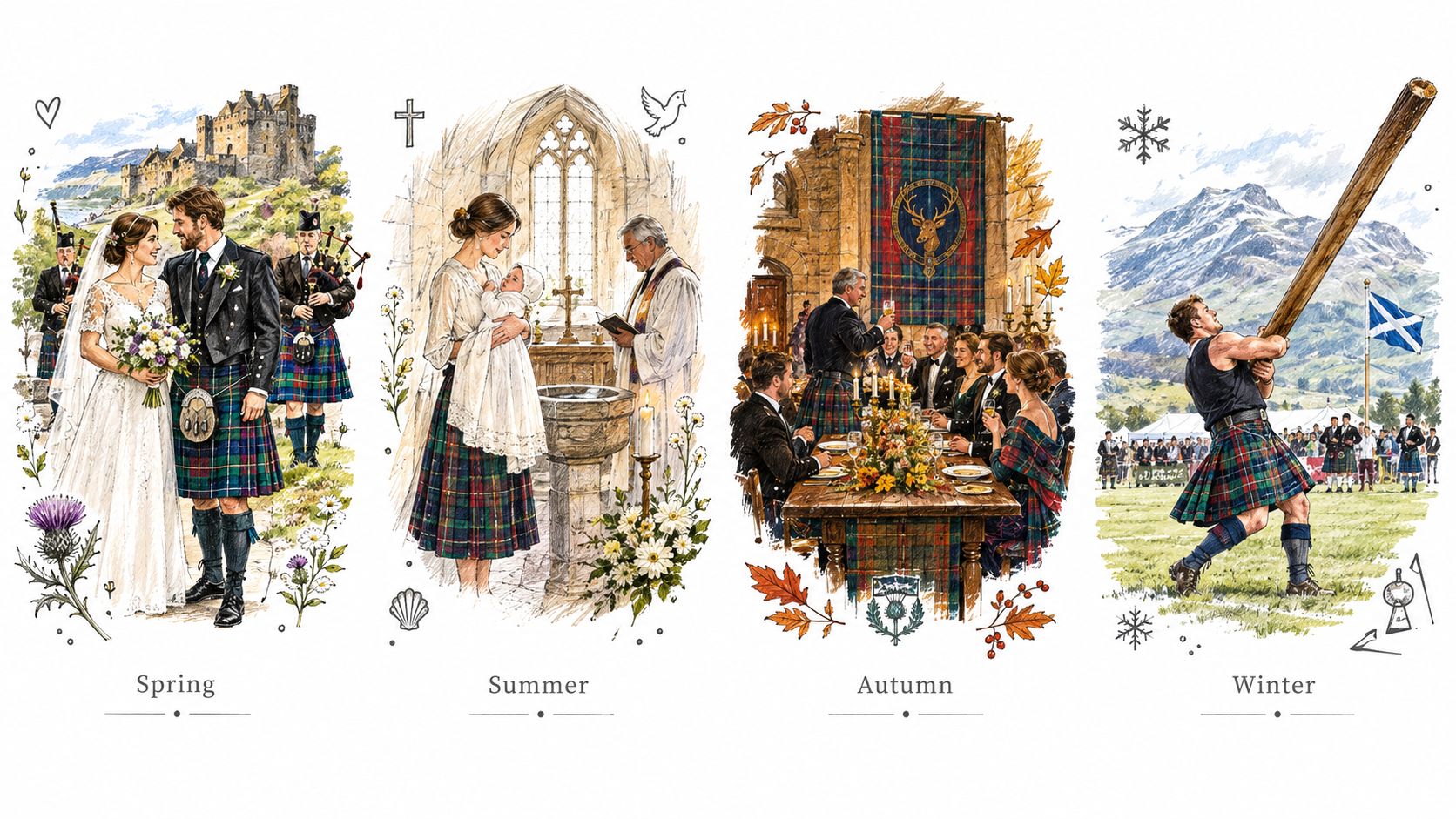
The reason is straightforward. These settings either reward tradition or tolerate it easily, and wool brings enough presence to look right in photographs and in person. That's also why the garment works well in colder months, where its weight and texture suit the season rather than fighting it. If you're planning a vineyard or countryside wedding and want an event setting that still respects a polished dress code, wedding planning at a vineyard is the kind of context where tartan can look elegant without feeling overstyled.
On the other hand, I'd avoid a wool tartan skirt for casual beach weddings, very hot summer events, or any invitation that asks for a different dress code. If the host wants light linen, muted cocktail wear, or something explicitly relaxed, don't force tartan into the room. Respect the brief.
A wet or changeable day doesn't disqualify the skirt, but it does affect how you wear it. Wool handles poor weather better than many people expect, yet that doesn't make it a summer substitute. Match the garment to the event, not just to your mood.
Here's the practical truth. A wool tartan skirt is a confidence piece when the occasion already has structure. When the event is loose, hot, or informal, it becomes the wrong kind of statement.
British weather is hard on clothes, and a wool tartan skirt deserves proper handling. Wool fibres can absorb approximately 30% of their own mass in moisture without feeling wet, and controlled testing is described at about 37°C to reflect normal body conditions. That is why wool stays comfortable in damp, cool conditions, but it still needs disciplined care. Their wool moisture and thermal report explains the fibre behaviour clearly.
Blot rain or food marks first, do not rub. Rubbing drives dirt deeper and roughs up the cloth surface. Hang the skirt to air naturally, away from direct heat, and reshape the pleats while it dries. If the care label allows washing, follow the label exactly. Wool is resilient, but that does not make careless washing harmless.
Read the care label before the first wear. Recent UK evidence shows 59% of consumers understand all or most clothing-care labels, while 27% say they always or nearly always check them when buying clothes Woolmark wardrobe study. That gap explains why good skirts get mistreated early. If you are paying for real wool, you should know the care instructions before a stain or spill forces the issue.
Press pleats with a cloth between the iron and the skirt, and keep the shape of the garment intact. Do not flatten the pleats into a lifeless panel. Store it where air can move, not in sealed plastic, and keep moth protection in place as part of normal ownership.
Small repairs are part of the cost of owning a proper wool tartan skirt. A loose seam, a hem that needs attention, or a pleat that has drifted can be put right without drama. That is the sensible answer.
UK repair research found that 82.2% of repaired textile items displace a new purchase, so repair usually protects value instead of wasting it. A wool skirt with a minor fault should be treated as a maintenance job, not a replacement case. I would rather see a good skirt altered and worn again than thrown out because of a fix that a competent tailor can handle.
If you want easier domestic care, washable polyviscose is simpler. You also give up the natural wool handle and the traditional cloth behaviour that make a tartan skirt worth buying in the first place.
Buy the wool tartan skirt if it meets four tests. The cloth should be 100% wool twill, ideally around the 335 g/m² mark for structure and pleat control. The fit route should match your body and your timeline, with made-to-measure for serious wear and off-the-peg only when the proportions already work. The occasion list should be real, not imagined. The care plan should include airing, moth prevention, and repairs you're willing to make.
Ignore fashion fluff and look at the garment like a working piece of Highlandwear. If the skirt is too light, too loose, too hard to care for, or too unlikely to get worn, walk away. If it passes those tests, buy it once and wear it often.
Kilts4Less supplies made-to-measure and off-the-peg Highlandwear, including wool tartan options and women's tartan skirts, so it's a sensible place to start if you want a structured skirt rather than a disposable fashion piece. Visit Kilts4Less if you're ready to compare cloth, fit, and outfit options with a retailer that works in traditional tartans and practical buying routes.

Kilts4Less is Scotland’s best bespoke, handmade kilt and highlandwear company since 1983.
Specialists in made-to-order handmade kilts, kilt jackets, sporrans & also Scottish, Irish / American Tartan Hybrids. Don’t settle for cheap alternatives – Buy Online at Kilts4Less – sale is now on!
Easy 30 days returns
30 days money back guarantee
100% Secure Checkout
PayPal / MasterCard / Visa