
You're already halfway dressed, the jacket's on the bed, and the waistcoat is the one piece that can make the whole outfit look sharp or slightly off. That moment in front of the mirror is where most mistakes happen, because a waistcoat doesn't just fill space. It changes the line of the torso, shows underneath a jacket, and in Highlandwear it has to sit properly against a kilt outfit as well as the shirt and accessories around it.
A good waistcoat gives structure without looking stiff. A bad one pulls, rides up, gaps at the buttons, or leaves a strip of shirt showing where it should be covering the waistband. That's why how to wear a waistcoat is really a fitting question first and a styling question second.
A groom once stood in front of me, jacket half-buttoned, asking why the outfit still looked unfinished even though every piece was expensive. The answer was simple. The waistcoat was doing the wrong job. Instead of sitting cleanly through the front and anchoring the shirt, it was floating slightly too short, so the shirt kept breaking the line at the waist.
Historically, the waistcoat was never meant to disappear. The Metropolitan Museum of Art records a British waistcoat dated 1615–1620, and later examples show it working as both protection and ornament, especially when coats were worn open at the front (Metropolitan Museum of Art). That still matters today. A waistcoat's fabric, colour, buttons, neckline and fit are all meant to stay visible.
Practical rule: if the waistcoat looks like an afterthought, the rest of the outfit usually does too.
That's why a plain waistcoat can steady a patterned shirt or tie, while a textured or patterned waistcoat needs quieter surrounding pieces. The point is coordination, not competition. In formal wear, the waistcoat should make the shirt and jacket look more deliberate, not busier.
A lot of men also underestimate how much the waistcoat changes posture. When it fits correctly, it holds the centre of the outfit together. When it doesn't, you feel it immediately, because you keep adjusting it, tugging at the front, or checking the mirror from the side.
The historical record backs that up. Waistcoat shapes changed repeatedly, from long early styles to narrower late-eighteenth-century forms, which is why modern wear should prioritise a close fit that still lets you move. That principle holds whether you're in a lounge suit or a kilt outfit.
The first choice isn't colour, it's context. A waistcoat for a wedding, a business event, a smart-casual dinner, and Highlandwear all solve slightly different problems. Start there and the rest gets easier.
A single-breasted waistcoat is the safest starting point for most formal settings. It's cleaner, easier to style, and works with a jacket without shouting for attention. A double-breasted version brings more presence and usually wants a more disciplined outfit around it, especially if the rest of the clothing is already formal.
Back finishes matter too. A plain back reads more purely formal. An adjustable strap or cinch lets you fine-tune the waistcoat's hold, which is useful when the waistline of the trouser or kilt sits differently from your usual everyday clothes. Cloth-backed versions can feel sturdier, but they still need to sit flat.
For a wedding or ceremony, the safer choice is usually a waistcoat that supports the rest of the outfit rather than trying to become the focal point. If you want a useful contrast example, the styling on this tweed waistcoat with a blue suit shows how texture can work when the surrounding pieces are calmer.
The strongest material lesson is simple. Heavier texture belongs in more grounded outfits, lighter cloth works better when you want the jacket or tie to lead. That applies in business settings too, where a waistcoat should sharpen the suit rather than make it feel costume-like.
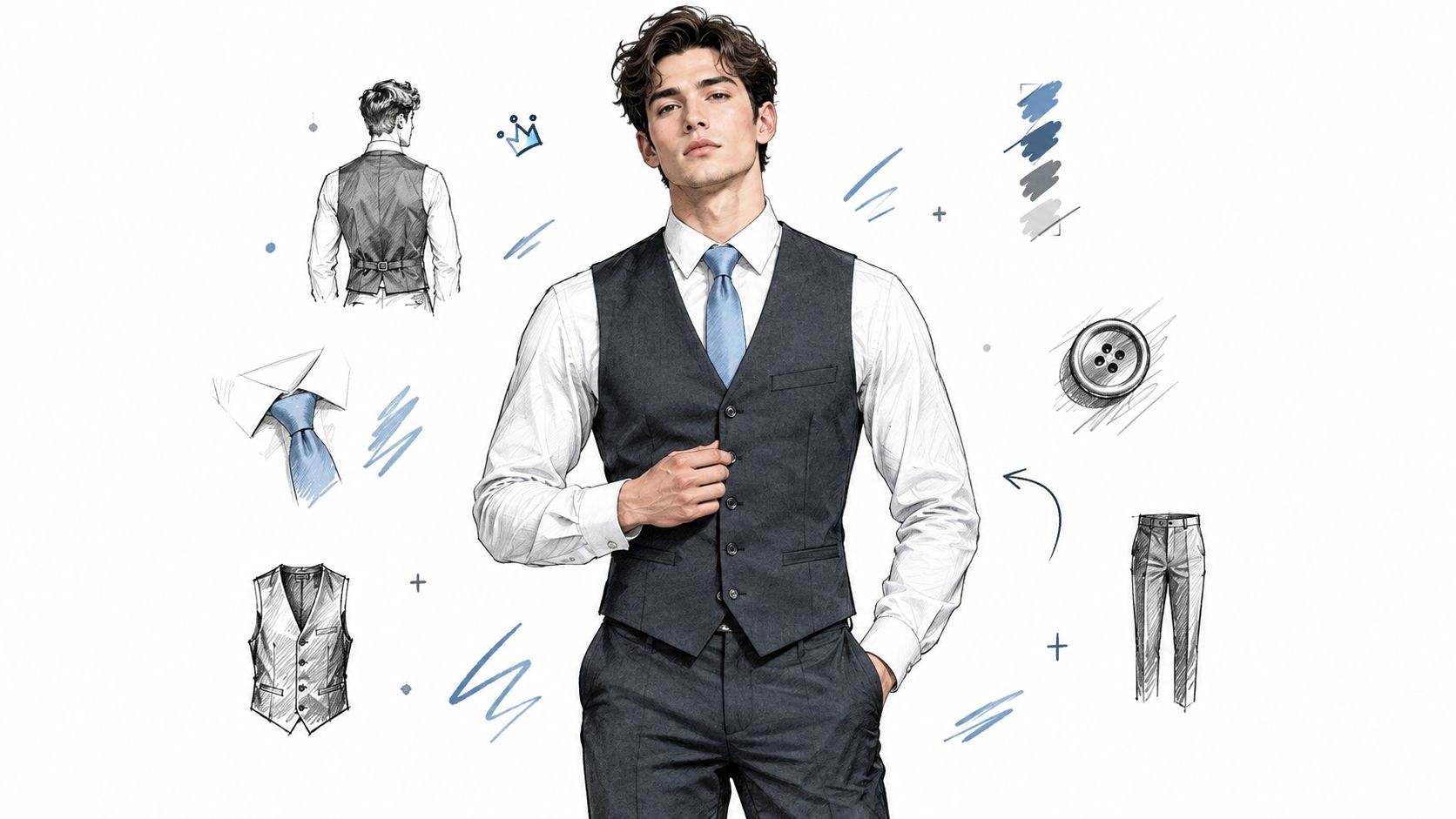
A good rule is to decide which garment deserves attention first. If the suit is plain, the waistcoat can carry texture. If the shirt or tie already has pattern, keep the waistcoat quieter. In Highlandwear, the balance changes again because the kilt already brings visual weight, so the waistcoat usually has to support rather than dominate.
For people choosing online, good body data helps. A sizing resource like body dimensions for better fit is useful because chest size alone rarely tells the full story. That matters especially when the waistcoat has to sit over a shirt and the trousers or kilt sit at a different rise from what you wear day to day.
A waistcoat can look right on the hanger and fail the moment you button it. I judge it in the same shirt, collar, and trousers or kilt the wearer will use, then I make him stand, sit, and reach forward. Anything less is guesswork.
Start with the hem. It should sit over the waistband cleanly, all the way round, including at the sides and back. If shirt or waistband is showing, the waistcoat is too short for that outfit. The front should hang flat without tight horizontal pull across the chest. If you see vertical folds, the cut is usually too generous.
Side seams need to drop straight from armhole to hem. If they flare out, the garment is fighting the body shape. Armholes should let the arms move without biting in, and the shoulder line should sit flat rather than floating.
If you cannot sit in it properly, it is not fitted. It is only being posed.
That seated test catches more bad fits than shop mirrors ever do. A waistcoat that looks tidy standing up can ride high at a wedding meal, pull across the stomach, or expose shirt below the hem as soon as someone leans back. Real wear matters more than showroom neatness.
The best fitting process is simple. Measure the body, check posture, baste the garment, test movement, then finish and press. For anyone ordering online, body dimensions for better fit gives a better starting point than chest size alone, because a strong chest, a fuller middle, or a longer torso all change how the waistcoat settles. That difference shows up fast in Highlandwear, where the rise of a kilt or trouser waist changes the line under the front edge.
A wedding waistcoat also needs to suit the rest of the outfit. this wedding waistcoat reference is useful for seeing how fabric and cut behave in a formal setting, but the ultimate test is still your own body shape and how much room you need through the ribcage, not just the size label.
A decent alteration can save a near miss. A poor size usually cannot be rescued without changing the whole garment.
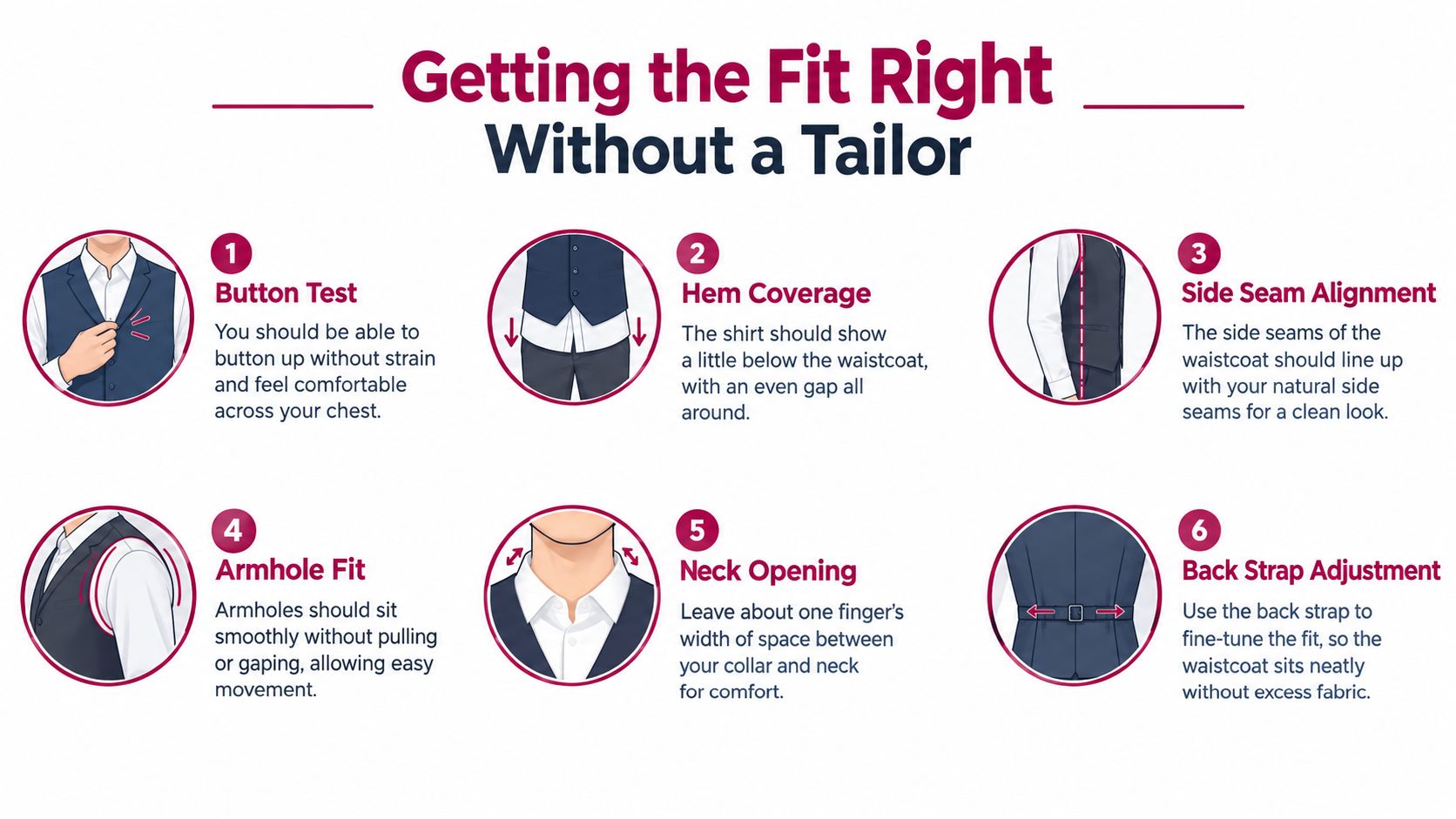
Stand in front of the mirror and fasten the waistcoat from the top down. On a standard single-breasted waistcoat, leave the lowest button undone. That keeps the front hanging properly and stops strain at the hem, which is where a poor fit shows first.
Double-breasted waistcoats follow their own button layout, so copying the single-breasted rule usually makes them sit badly. A sheriff-front waistcoat needs the same respect for its cut. Fasten it as designed, not as if every waistcoat works the same way.
Movement tells you more than a neat mirror check. Sit down, lift your arms, breathe normally, and watch what happens at the chest and hem. If the front opens, pulls across the stomach, or exposes shirt below the waistband, the fastening is not doing its job.
The right question is not whether a rule sounds tidy. It is whether the waistcoat stays flat when the body moves.
There is one point that gets ignored too often. In Highlandwear, the rise of a kilt changes the line under the front edge, so a fastening that works over trousers can behave differently with a kilt. That is why some waistcoats that seem fine standing up fail as soon as someone sits through a meal or starts dancing.
A few builders' habits help here. If the waistcoat needs every button closed to stay in place, it is probably too tight. If the front hangs open or flaps away from the body, it is too loose. Either way, the answer is adjustment, not styling trickery.
For a broader look at closures and finishing, the guide on how to finish your garment is a useful reference point when you are comparing fastening systems across waistcoat styles.
The button rule is a default, not a law.
A well-fastened waistcoat should stay calm while you move, sit, and turn. If it does not, the garment needs correcting before the event, not after the photos.
A waistcoat behaves differently over a kilt than it does over trousers. The rise is different, the visual centre of the outfit sits higher, and the jacket, if you wear one, often frames the waistcoat more dramatically. That changes how the garment should be cut and how it should be worn.
The key is coverage and proportion. The waistcoat should sit neatly over the shirt and meet the top of the kilted waist area without leaving a gap when you move. Because the kilt already creates strong horizontal lines, the waistcoat has to stay calm and controlled.
With a Prince Charlie jacket, the waistcoat is part of a more formal Highlandwear system. With an Argyll jacket, the look tends to be more flexible, but the waistcoat still needs to sit cleanly and not flare when the jacket is open or removed. A jacket-off moment at a reception is where a poor fit shows instantly.
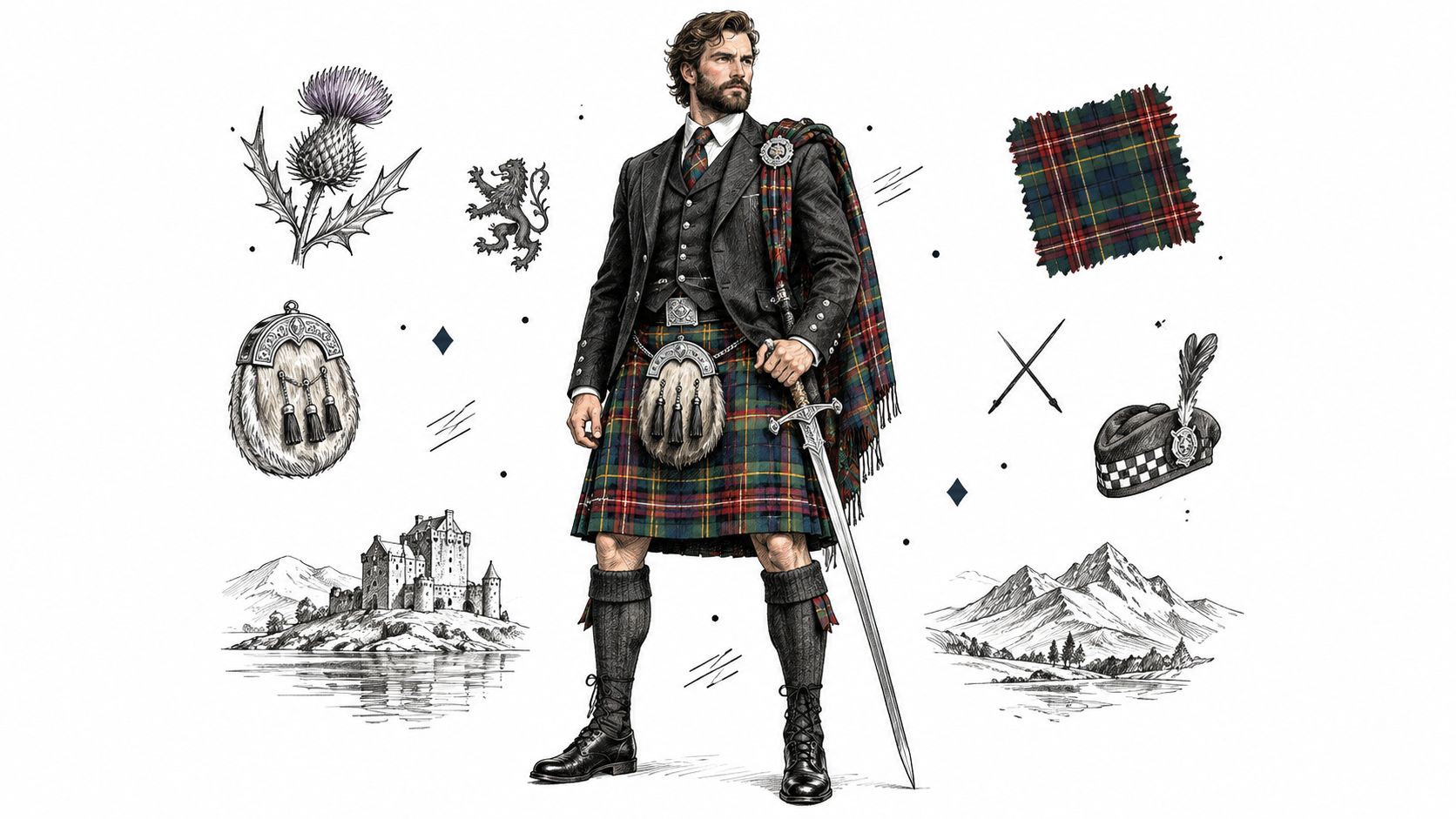
Tartan matching is mostly about judgment. A waistcoat can repeat the tartan or support it through a quieter cloth, but it should never fight the kilt's pattern for attention. In practice, a solid waistcoat often gives the most stable result because the kilt already carries enough visual movement.
Accessories also matter more in Highlandwear. A sporran, chain, pocket watch, or fly plaid changes the weight around the torso and can pull attention to the wrong place if the waistcoat is loose. Make sure the front lies smooth before you add those pieces.
The video guide on dressing in a kilt outfit is useful if you want to see how the layers work together in motion. A waistcoat in Highlandwear should support the silhouette when standing, seated, and dancing. If it only works in one of those positions, it's not ready.
Most waistcoat problems are visible long before you leave the house. The trouble is that people explain them away. They say the shirt is to blame, or the jacket, or the lighting in the mirror. Usually it's the waistcoat.
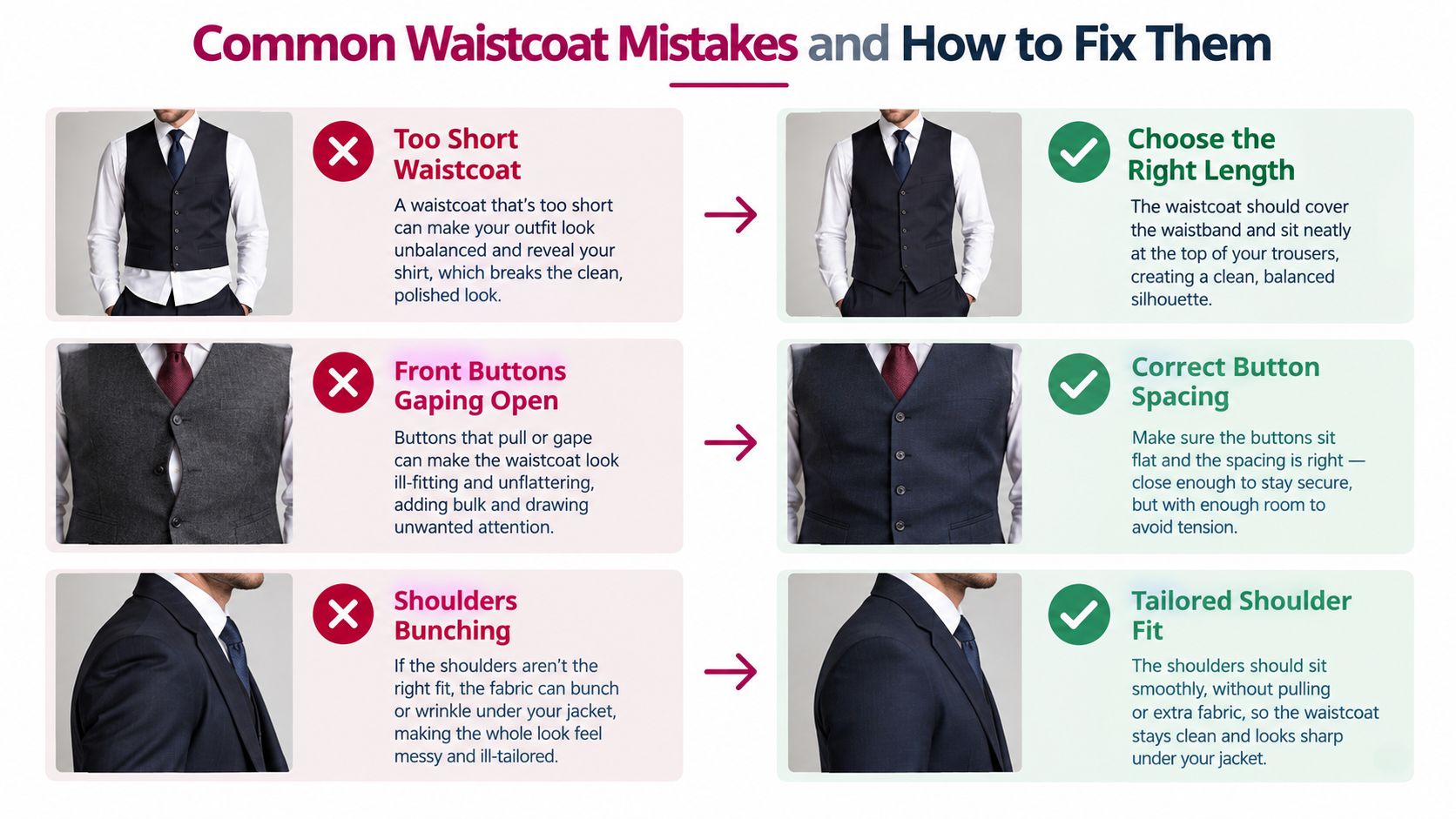
A waistcoat that's too short shows shirt below the hem or leaves the waistband visible. The fix is a longer cut, or a different size entirely if the shape is wrong. Front gaping usually means the chest is too tight, the size is wrong, or the wearer is trying to force a formal fit over the wrong shirt and trousers combination.
Shoulders bunching under a jacket is often a sign that the waistcoat is too bulky or the armholes are cut badly. Low-rise trousers create another problem, because they break the line between waistcoat and waistband. The outfit starts to look split in half.
A quick pre-event inspection saves embarrassment. Check the hem, then the buttons, then the shoulders. Put the jacket on, sit down, and look again. If the shirt starts appearing or the front opens under movement, fix it before you leave the room.
A waistcoat works best when the rest of the outfit doesn't fight it. The shirt collar should support the tie or cravat cleanly, the cuffs should sit properly under the jacket, and the pocket square should feel deliberate if the jacket comes off. Keep the front of the torso organised, then add detail.
A boutonnière adds weight near the chest, so keep the waistcoat smooth underneath it. A watch chain can look excellent in the right setting, but it should never distract from a badly fitted front. Fly plaids and Highlandwear accessories need even more discipline, because they add movement and texture around an already structured garment.
If you're wearing a tie, make sure the knot sits comfortably inside the waistcoat opening without crowding it. If you're wearing a cravat, the neckline should still stay open enough to show shape, not swallow the fabric. These are small things, but they're exactly what separates a finished outfit from a merely assembled one.
A simple pre-event check works:
If the outfit passes those checks, you're dressed properly. If it fails one of them, deal with the fit, not the mirror angle. A waistcoat should serve the occasion, not force you to keep performing for it.
If you want a waistcoat, kilt outfit, or full Highlandwear combination that actually fits the way it should, Kilts4Less has made-to-measure and off-the-peg options, along with the accessories that finish the job properly. For weddings, ceremonies, and formal events, their range is built around the same practical standards covered here. Visit them when you're ready to put the outfit together with less guesswork and a better result.

Kilts4Less is Scotland’s best bespoke, handmade kilt and highlandwear company since 1983.
Specialists in made-to-order handmade kilts, kilt jackets, sporrans & also Scottish, Irish / American Tartan Hybrids. Don’t settle for cheap alternatives – Buy Online at Kilts4Less – sale is now on!
Easy 30 days returns
30 days money back guarantee
100% Secure Checkout
PayPal / MasterCard / Visa