
You're standing beside a loch at a winter wedding, programme in one hand and a glass in the other, while the wind finds every gap between your cuff and sleeve. Bulky gloves would keep you warmer, but they'd also interfere with a sporran, a steering wheel, a camera, or the careful handling of a buttonhole. Cashmere hand warmers offer a refined layer of passive insulation without turning your hands into padded mitts.
They're especially useful for formal Highlandwear, outdoor ceremonies, winter walks, and long spells in the stands. But softness alone isn't a buying guide. The right pair needs a dense knit, a practical fit, credible fibre provenance, and a care routine suited to damp British weather. If your hands become unusually cold, change colour, or react strongly to mild temperature shifts, you'll also need a layering plan rather than a luxury accessory used in isolation.
At an outdoor Scottish wedding, the problem usually appears gradually. Your fingers still move freely, so you keep your gloves off while photographs are taken, the ceremony runs on, and guests gather outside. Then the cold settles into your hands. Full gloves may solve the immediate discomfort, but they can look heavy with a tweed jacket or make it awkward to hold a wedding programme, adjust a sporran, fasten a coat, or grip a steering wheel.
Cashmere hand warmers occupy the useful middle ground. They cover the wrist and part of the hand while leaving the fingers available for practical work. That makes them a strong choice for a best man carrying rings, a piper managing equipment, a guest holding a phone for photographs, or a rugby supporter who needs enough dexterity for tickets, refreshments, and conversation.
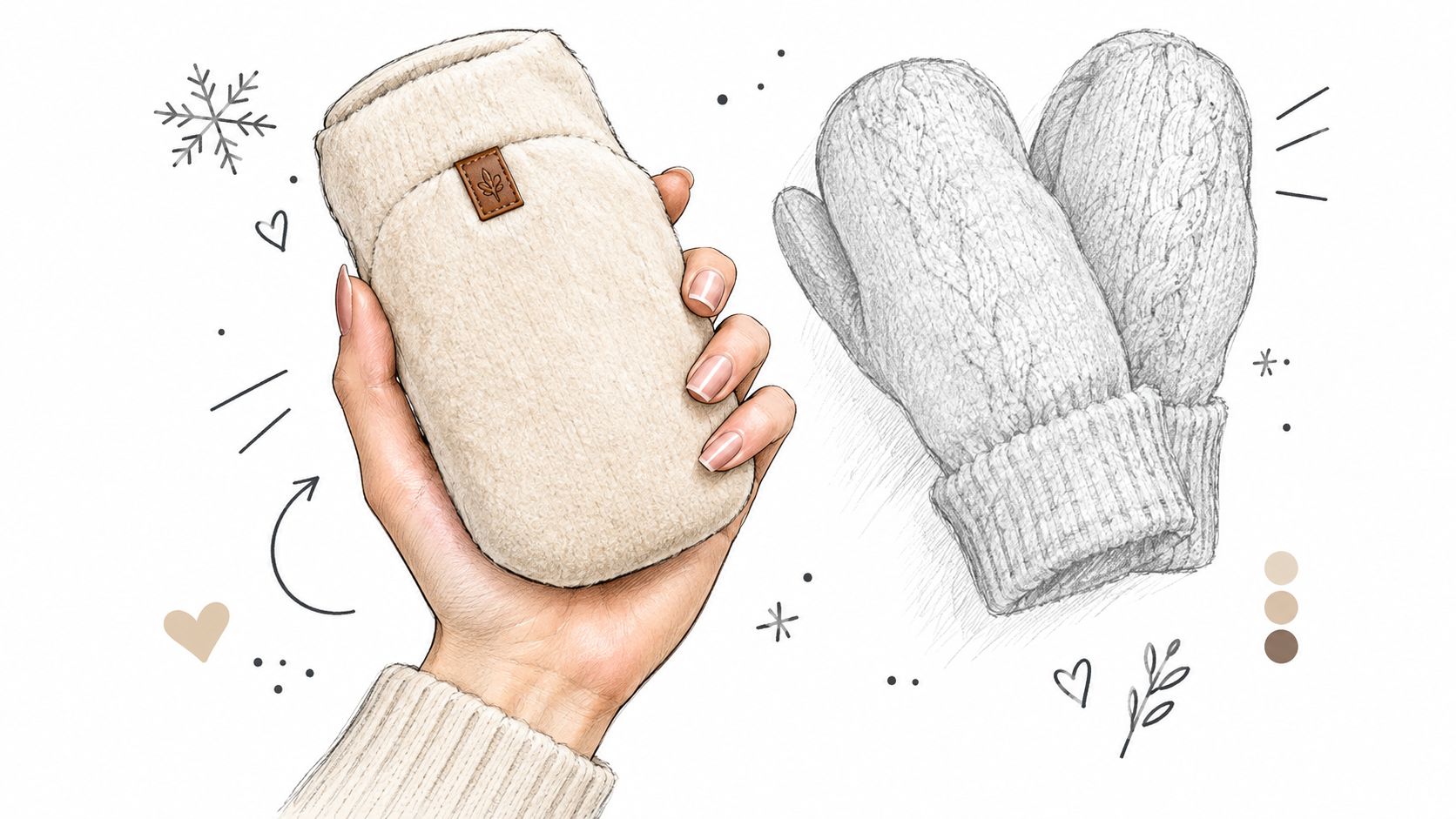
The advantage isn't just that cashmere feels pleasant against the skin. A well-made hand warmer avoids the excess material that often makes conventional winter gloves clumsy. You can still handle cufflinks, a camera, a glass, or a phone without repeatedly removing the accessory and exposing your wrists.
A snug wrist section also works neatly with formal clothing. It can sit under a coat sleeve, beneath a tweed cuff, or alongside a kilt jacket without competing with tartan, shirt cuffs, or jewellery. Neutral shades such as oatmeal, charcoal, navy, and soft grey are easy to coordinate. A stronger colour can work too, provided it relates to a tartan accent rather than fighting it.
Practical rule: Choose hand warmers for the activity, not the fibre name. If you need rain protection, grip, or wind resistance, cashmere should form part of the system rather than replace every other layer.
Cashmere isn't an active heat source. It won't warm already chilled fingers in the way a heat pack can. If you're comparing passive insulation with an active option, this guide to finding microwavable warmers can help you think through the difference. For a formal event, however, the best combination may be a discreet cashmere layer for comfort and finger mobility, with a separate warmer kept in a pocket when conditions demand more.
Cashmere keeps hands warm through fibre-level insulation, not built-in heat. Its fibres are naturally crimped, meaning they form small waves that trap pockets of still air. The Sustainable Fibre Alliance's explanation of cashmere fibre structure notes that greater crimp supports insulation and yarn cohesion, which helps a well-made cashmere knit provide warmth without the bulk associated with many conventional wool accessories.
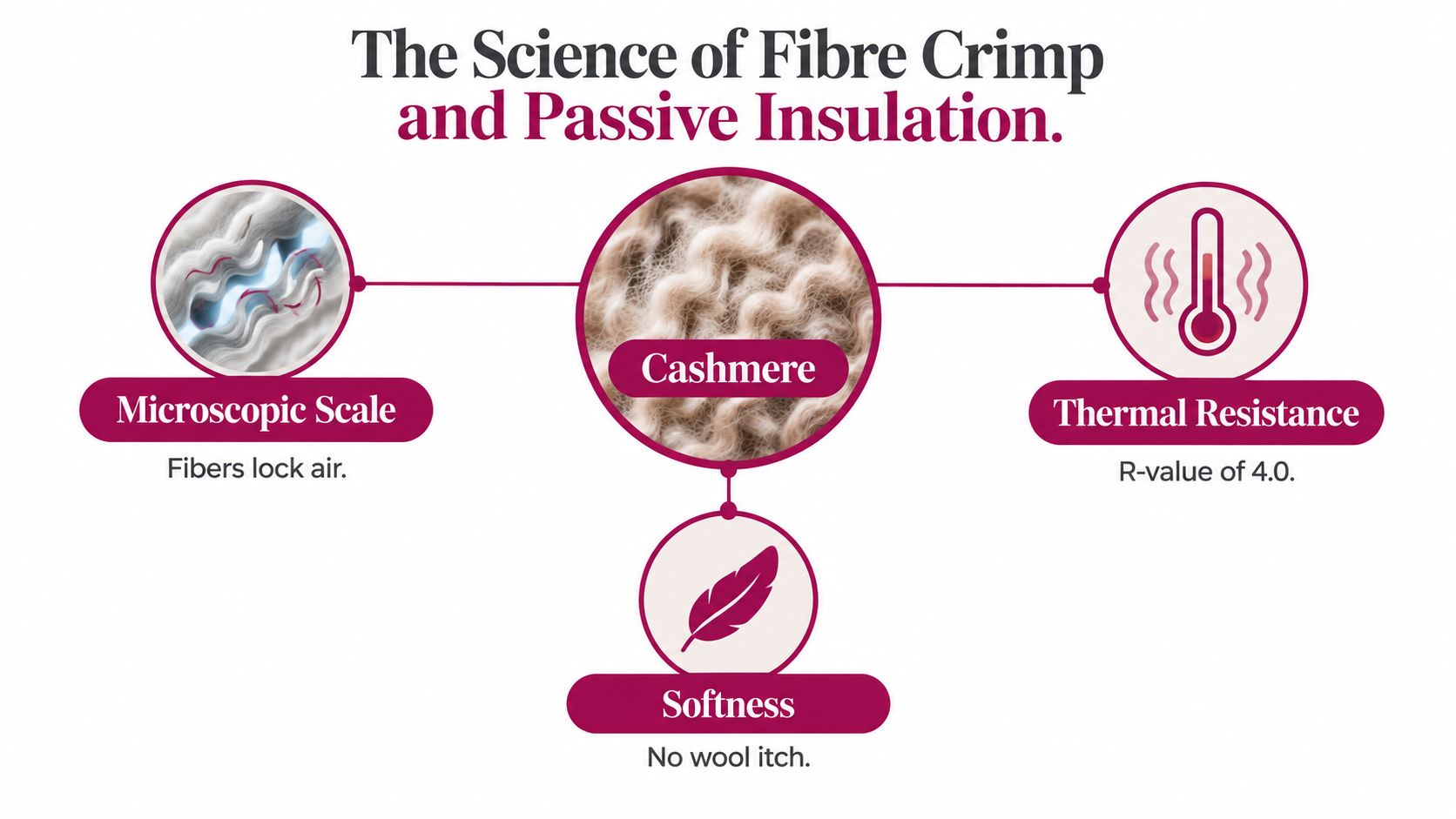
The fibre creates the opportunity for insulation, but the knit determines how effectively the material holds air around your hands. A loose, thin, poorly finished warmer may feel soft while offering little protection against moving air. A dense knit with stable tension, resilient fibres, and a properly shaped cuff is a more reliable choice.
Look closely at the wrist opening. It should sit close enough to reduce gaps without restricting movement. The top edge should overlap the sleeve rather than finish exactly where your coat or jacket ends. An exposed cuff gives cold air an easy route towards the wrist, and the hand warmer loses much of its practical value.
Cashmere also interacts with moisture. Like wool, it can absorb moisture vapour and alter its insulating behaviour as humidity changes. That makes it comfortable as breathable insulation in cool, damp conditions, but it doesn't make the fabric waterproof. Drizzle, wet seating, wind, and a soaked outer layer still require protection from an appropriate shell.
Before buying, assess the product against three physical questions:
Warmth is therefore a combination of crimp, trapped air, knit density, fit, and dryness. The softest pair isn't automatically the warmest. In exposed UK weather, stopping wind and keeping the insulating layer dry can matter more than choosing the most luxurious-feeling fabric.
Cashmere can help retain heat, but it isn't a treatment for Raynaud's phenomenon and it won't correct poor circulation. Raynaud's may be triggered by cold or even mild temperature changes. The NHS guidance on Raynaud's recommends keeping hands warm and avoiding sudden changes in temperature, while clinical advice supports using thin liners beneath warmer outer gloves rather than relying on one delicate layer.
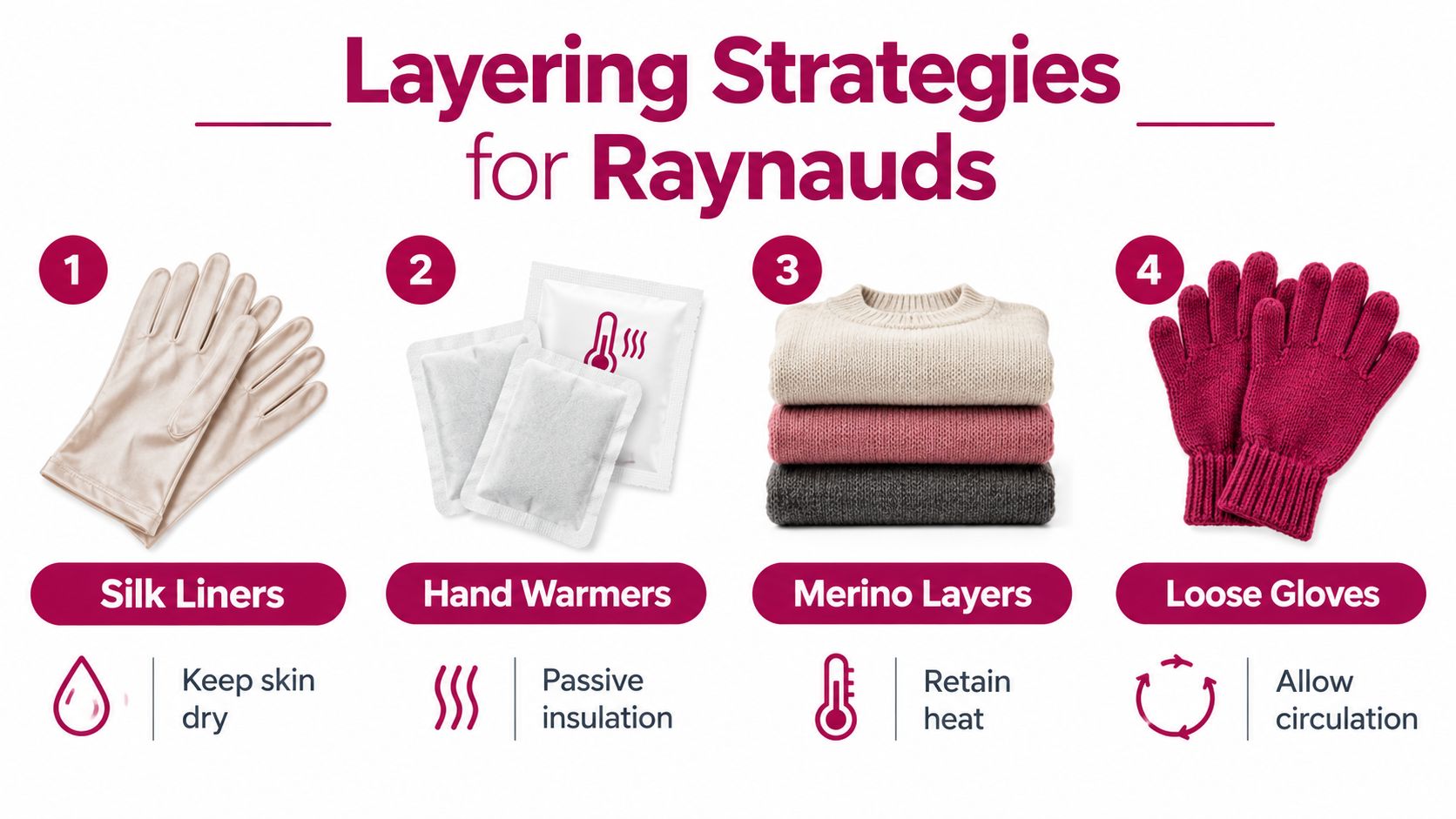
Start with a thin liner. A silk or fine knitted liner gives you a smooth base and helps prevent the cashmere from picking up as much direct friction. It also keeps the hand warmer from becoming your only layer when temperatures drop.
Add the cashmere hand warmer. Wear it close to the wrist and hand, with the cuff overlapping your sleeve. The purpose is to retain the air warmed by your body and reduce heat loss without sacrificing finger movement. Don't choose such a tight fit that it leaves your fingers cramped or makes the wrist feel compressed.
Finish with a wind-resistant outer layer. A loose glove or mitten can protect the insulating layers from moving air and drizzle. If you need dexterity, choose an outer glove with enough room to avoid flattening the cashmere. A compressed layer holds less air and can feel colder despite being made from a premium fibre.
Use extra heat thoughtfully. A pocket warmer can provide active heat during a prolonged ceremony or match, but follow its instructions and avoid placing intensely hot objects directly against numb skin. Cold fingers shouldn't be pressed directly against a radiator or another intense heat source. Rewarm gradually.
For people who also notice symptoms in their feet or legs, information about leg circulation issues may help explain why hand warmth shouldn't be treated as an isolated clothing problem. Persistent or unusual circulation symptoms deserve medical attention rather than a more expensive pair of gloves.
Layering advice: Cashmere belongs between a smooth liner and a protective outer glove when Raynaud's or severe cold sensitivity is involved. It shouldn't be expected to block wind on its own.
Keep the rest of your clothing consistent with the same principle. A warm torso helps your body manage cold more effectively, while loose layers avoid unnecessary restriction. A substantial wool jumper, such as this traditional Aran sweater, can support a broader winter outfit, but it doesn't replace medical advice or a windproof hand layer.
Contact your GP if symptoms are severe, worsening, one-sided, or begin for the first time after age 30, as NHS guidance advises. You should also seek advice when episodes are difficult to manage, cause significant skin changes, or don't settle with sensible warming. Cashmere can improve comfort. It cannot prevent an attack or improve circulation by itself.
The word cashmere tells you what fibre is present, but it doesn't tell you enough about how the fibre was sourced, sorted, spun, or knitted. For a hand warmer that will rub against coat cuffs, steering wheels, event equipment, and pockets, provenance and construction are more useful buying signals than a luxury-sounding product description.
The Sustainable Fibre Alliance standard addresses goat welfare, biodiversity, land management, herder livelihoods, fibre quality, and supply-chain traceability. The SFA certification overview is therefore worth checking when responsible sourcing matters to you. Certification doesn't guarantee that a hand warmer won't pill or wear through, but it provides evidence of controls across the fibre and supply chain.
Long-fibre cashmere is generally less prone to surface fibre migration and pilling than short-fibre material. A dense or multi-ply yarn can also improve stability, although it may feel less featherlight and flexible. For an accessory that will be worn mainly at weddings, those trade-offs may favour a softer, lighter knit. For regular commuting or match-day use, resilience deserves greater weight.
| Fibre Type | Pilling Resistance | Best Use Case |
|---|---|---|
| Long-fibre cashmere | Generally stronger resistance to surface migration and pilling | Frequent formal wear, commuting, and repeated cuff friction |
| Standard cashmere | Varies with fibre length, yarn, and knit density | Occasional wear where softness and lightness lead the decision |
| Cashmere-wool blend | Depends on the proportions and construction | More robust everyday layering when the label clearly states fibre content |
Read the fibre-content label carefully. A cashmere blend may have a different level of warmth, softness, flexibility, and wear performance from a cashmere-rich or 100% cashmere product. Don't assume the higher price proves better construction, and don't assume a lower price offers poor value. Inspect the knit, ask about traceability, and check the return terms before ordering online.
Cost per wear is only useful when you include the occasions on which you'll genuinely use the item. A cashmere hand warmer worn repeatedly through winter, maintained carefully, and still presentable for formal events may justify its premium. A delicate pair bought for one ceremony and then stored damp will not.
Prioritise a product that matches your real routine:
The best purchase is traceable, properly constructed, correctly sized, and suited to how you spend time outdoors.
Scotland's cashmere story is closely tied to the Scottish Borders, especially Hawick. Commercial yarn manufacture began in the 1830s, and specialised mills in the region still support the production of fine knitwear, as outlined in this historical account of Scotland's cashmere manufacturing heritage. That background gives a cashmere accessory more substance than a generic luxury label. It connects a modern hand warmer with a regional tradition of processing fine animal fibres into lightweight clothing.
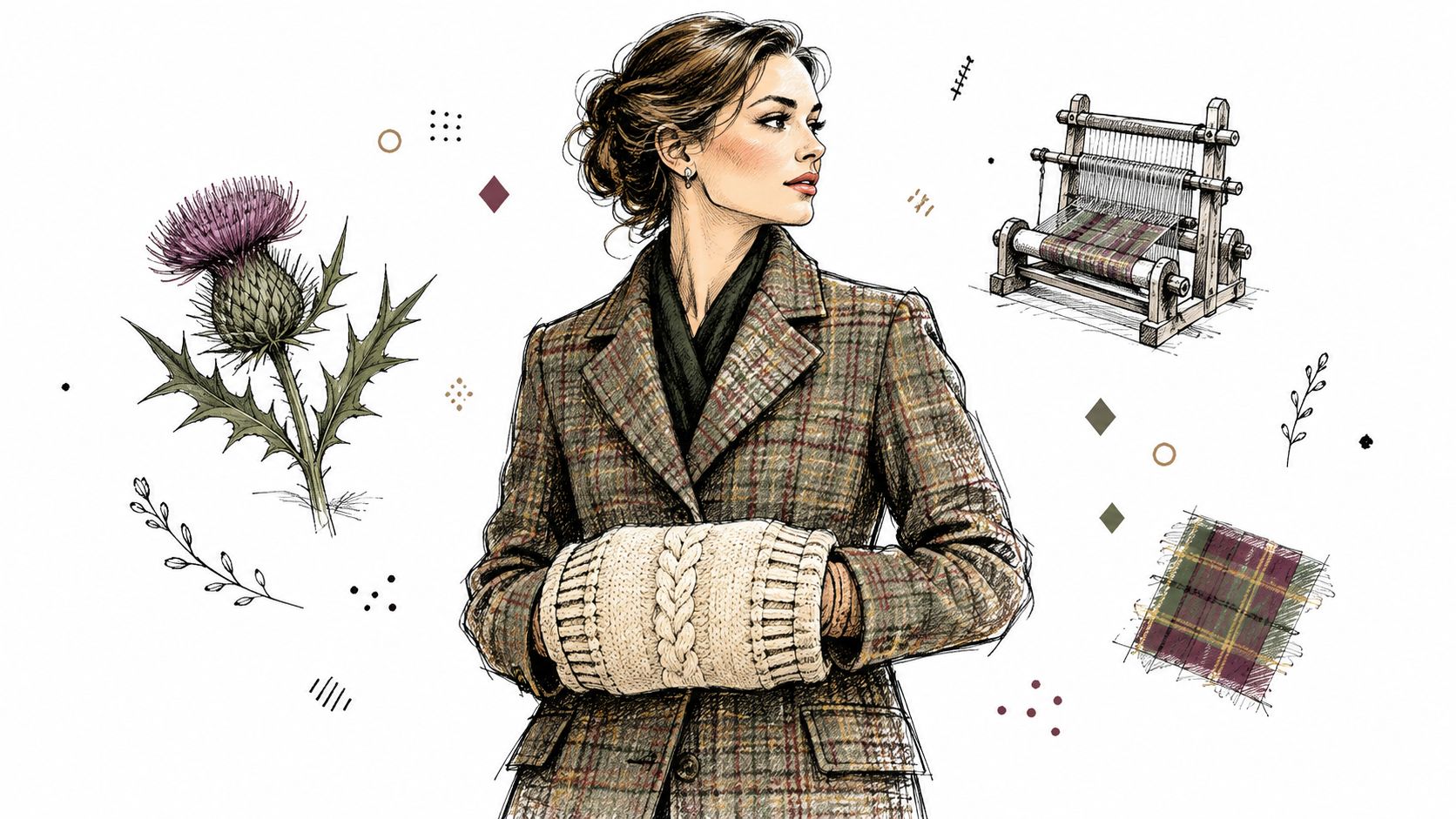
For a winter wedding, oatmeal or stone cashmere works well with navy, charcoal, brown, and muted tweed. It adds warmth without introducing another competing pattern. If the wedding party wears a distinctive tartan, choose a solid hand warmer that picks up one quiet colour from the sett rather than matching every shade.
With Highlandwear, proportion matters. A short cuff can disappear beneath a jacket sleeve, while an overly long one may bunch against shirt cuffs and jewellery. Aim for a clean overlap that looks intentional. Cashmere hand warmers should support the silhouette, not become the loudest part of it.
A few dependable combinations work particularly well:
For a traditional outfit, details should earn their place. The same principle applies when selecting a tartan such as the Gordon tartan kilt. A cashmere hand warmer works best when it complements the tartan, shirt, jacket, and accessories as part of one considered outfit.
Don't treat heritage as a reason to ignore performance. A hand warmer that looks perfect but leaves the wrist exposed or collapses under a coat cuff isn't doing its job. Choose the construction first, then select the colour and finish that suit the occasion.
Cashmere dislikes neglect more than it dislikes regular wear. Rain, condensation, friction from a coat cuff, and careless washing can stretch or felt a delicate knit. UK patient guidance notes that wetness makes cold feel worse and recommends gradual rewarming rather than direct heat, which is another reason to dry a damp hand warmer carefully instead of placing it on a radiator.
If the hand warmer catches drizzle, remove it when practical and press out moisture gently. Don't wring it, twist it, or put it straight against intense heat. Reshape it while damp, lay it flat on a clean towel, and let it dry away from radiators, fires, and strong direct sunlight.
Wash only as the manufacturer allows. If hand-washing is permitted, use cool water and a suitable gentle detergent, avoid aggressive rubbing, and rinse without sudden temperature changes. Rolling the item in a towel removes excess water without stressing the fibres. The recovery-garment care guidance from Thermo Recovery Wear offers useful general advice on reducing friction and controlling pilling in delicate fabric.
Store the pair clean and completely dry. Fold rather than hang, keep it away from damp cupboards, and use a breathable storage arrangement that reduces exposure to moths. Avoid storing it inside a coat pocket after an outdoor event, especially if the pocket contains moisture or grit.
Pilling often begins where the fabric repeatedly rubs. Steering wheels, rough coat fasteners, bag straps, and Velcro can all accelerate surface wear. Rotate the accessory when possible, keep fingernails and jewellery from catching the knit, and remove loose pills carefully rather than pulling them out.
A tartan accessory such as a men's tartan scarf can add another layer around the neck, but it won't protect the hands from wind or wetness. Build the outfit around the weather, then maintain each piece according to its fibre and construction.
Cost per wear should include care, frequency, and lifespan. A well-maintained cashmere hand warmer used for ceremonies, commuting, and outdoor events can make sense as a long-term accessory. If your routine involves heavy rain, hard manual work, or frequent abrasion, a washable wool or synthetic liner may be the more practical everyday companion, with cashmere reserved for occasions where comfort, dexterity, and presentation matter.
Kilts4Less supplies made-to-measure and off-the-peg kilts, Highlandwear accessories, complete outfits, and hire options for weddings, ceremonies, and outdoor events. Visit Kilts4Less to coordinate cashmere hand warmers with tartan, jackets, scarves, and the rest of a properly prepared Highlandwear outfit.

Kilts4Less is Scotland’s best bespoke, handmade kilt and highlandwear company since 1983.
Specialists in made-to-order handmade kilts, kilt jackets, sporrans & also Scottish, Irish / American Tartan Hybrids. Don’t settle for cheap alternatives – Buy Online at Kilts4Less – sale is now on!
Easy 30 days returns
30 days money back guarantee
100% Secure Checkout
PayPal / MasterCard / Visa