
You're standing in front of your wardrobe with a pair of bold checked trousers in your hands, wondering whether they'll look sharp with a navy blazer or as though you've arrived late for a costume party. The uncertainty usually isn't caused by the pattern itself. It comes from the fit, the cloth, the amount of contrast in the rest of the outfit, and whether the trousers suit the occasion.
Plaid trousers for men work best when treated as structured clothing rather than novelty clothing. The right rise, clean break, restrained jacket and substantial shoe can make them look considered and contemporary. The wrong waist size or an overly busy combination can make even excellent tartan appear awkward. Their Scottish heritage matters, but practical decisions about proportion and comfort determine whether you'll wear them.
A man trying on tartan trews for the first time often sees only a strong pattern. Look more closely and the garment carries a history that reaches well beyond modern country dress. Tartan trousers developed from a tradition of regional identity, military clothing and Highland dress, then gradually entered mainstream British menswear.
The National Museums Scotland account of tartan in Georgian Britain describes how tartan moved beyond Highland clothing into fashionable menswear. The Scottish Tartans Authority records a form of tartan associated with the Scottish court in 1538, while the restriction on Highland dress was repealed in 1782. Those milestones help explain why tartan can now appear at a wedding, in a well-cut wardrobe or at a cultural ceremony without losing its connection to Scotland.
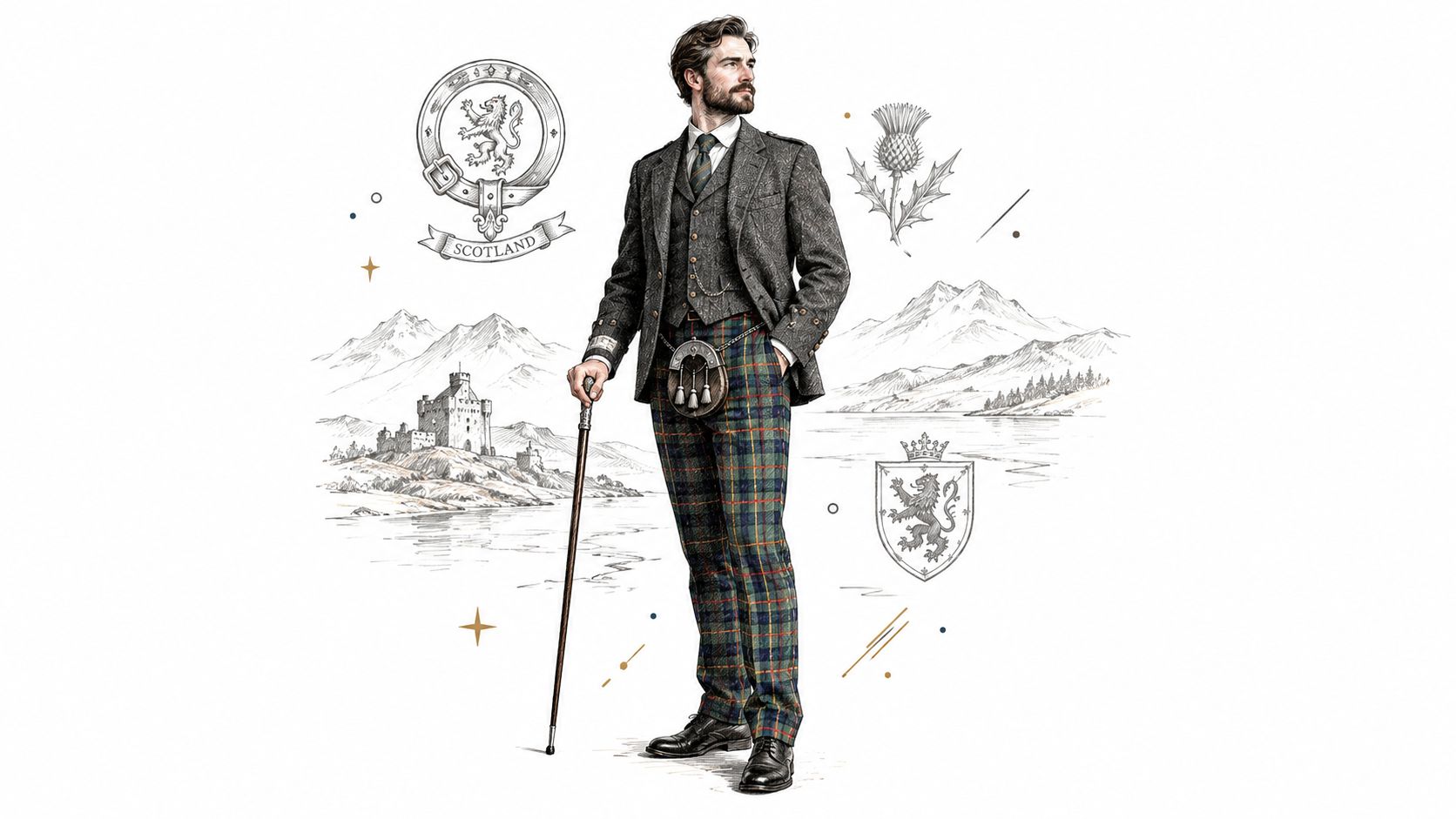
The 18th century is a useful milestone for men's plaid trousers. Scottish companies raised north of Stirling wore kilts or tartan trews on parade and in battle, making the trousers part of military and regional identity rather than a purely decorative choice. Their practical role also explains why a well-made pair still feels like serious clothing. Tartan was designed to be worn, moved in and recognised.
The pattern later gained a place in elite tailoring. The British menswear history timeline from London and Partners notes the influence of the Prince of Wales, later the Duke of Windsor, who combined traditional British plaids, tartans and tweeds during the 1920s. That association helped establish tartan as a signature menswear textile rather than a fabric confined to Highland settings.
Practical rule: Treat tartan trousers as heritage tailoring with a strong visual identity. Build the outfit around their structure, not around the idea that they must be toned down or disguised.
The result is a garment with genuine range. A dark, restrained check can sit comfortably beneath a wool jacket, while a brighter tartan may suit a ceremony or formal Highlandwear outfit. Understanding the history gives the pattern context, but it's still the cut that decides whether the finished outfit looks polished.
A pair of plaid trousers can look sharp on the hanger and still feel wrong in the office if the cloth fights the body. Fabric controls drape, breathability and recovery after sitting, so it has as much to do with fit as the pattern itself. For UK wear, wool and wool-blend cloths are practical because they hold shape, breathe reasonably well and recover better than many flatter, more synthetic fabrics. That matters with check patterns, where any drag, twist or crease is easier to see.
Wool also makes day-to-day care less fussy. The wool care guidance from COS recommends a lighter maintenance routine, and that fits the way tailoring should be handled. Wool resists odour naturally, so airing the trousers often refreshes them between wears. Give the cloth time to rest after use, and use steam rather than pressing hard with a hot iron if you want to protect the surface texture.
Composition changes both feel and recovery. Pure wool gives the most traditional hand and the cleanest fall, while a wool blend can offer a different balance of softness, resilience or cost. Judge the cloth by how it behaves when pinched, folded and released. The question is whether it still supports the pattern once the trousers are on a moving body.
Weight shapes drape and warmth. A standard 10oz 100% wool cloth suits classic made-to-measure tartan trousers, while heavier cloth can be requested when a firmer leg line is wanted. The Lochcarron 13oz Braeriach tartan cloth is a useful example of a medium-heavy option for buyers who want more body in the trouser without going to an overly rigid cloth.
Lining affects comfort and durability. Front knee lining is common in classic tartan trousers because it reduces friction when walking or sitting. Full front-and-back lining adds protection and can improve seated comfort, but it may also make the trouser warmer and slightly less soft against the skin. If you are weighing the trade-off, this guide on which lining is better gives a clear comparison of suede and fabric surfaces.
| Feature | Standard 10oz Wool | Heavyweight Wool (On Request) |
|---|---|---|
| Drape | Balanced and adaptable | Firmer and more structured |
| Comfort | Easier for regular event wear | Warmer, with a less soft hand |
| Lining approach | Front knee lining is practical | Full lining can support durability and comfort |
| Best use | Weddings, dinners and smart-casual dressing | Colder conditions and a more formal, substantial silhouette |
The heaviest cloth is not always the better choice. A strong check already carries visual weight, so a medium wool with sensible lining often looks more refined than a bulky fabric that feels stiff indoors. For most event wear, the right answer is the cloth that balances warmth, hand feel, movement and the amount of time you expect to spend seated.
The most expensive mistake with tartan trousers is often not the cloth. It's ordering a familiar trouser size and assuming the result will fit in the same way. UK evidence identifies poor fit as the leading reason for fashion returns, with trousers and jeans accounting for 15% of returns in one survey reported by Internet Retailing. The same source reports that 69% of men say they don't return ill-fitting clothes, which suggests that many buyers tolerate discomfort rather than resolve the problem.
Checks make that decision more visible. A waistband that twists, a thigh that pulls or a break that collapses can interrupt the lines of the pattern. Use a detailed guide to choose the right trousers as a general reference, then apply these checks specifically to plaid.
Start with the rise. Sit naturally and check that the waistband stays secure without cutting into your stomach. A low rise can pull the front check out of alignment, while an excessively high rise may create too much fabric above the thigh. The correct rise lets the trousers sit securely without constant adjustment.
Check the seat and thigh. Tartan trousers need enough room for movement, but excess cloth can make the pattern look slack. Walk, sit and climb a step. If the horizontal lines spread across the seat or upper leg, the cut is too tight. If they remain visibly wavy when you're standing still, you may have too much volume.
Assess the leg line. The side seam should fall cleanly from the hip through the knee. A sharp taper can make a large check look crowded at the ankle, while a very wide leg can overpower a short jacket. Choose the leg shape according to the scale of the tartan and the formality of the outfit.
Set the break deliberately. A light break gives a modern, clean finish, while a fuller break feels more traditional. Don't allow the hem to bunch repeatedly over the shoe. The check should meet the footwear in a controlled way, rather than forming a stack of folds.
Take measurements over the clothing you'll normally wear beneath the trousers, especially if you plan to add a shirt and waistcoat. If the garment is made to measure, provide a standing measurement and explain how you prefer the trousers to sit. A useful fitting conversation covers rise, seat, thigh, knee, hem width and finished inside leg, not just waist size.
A jacket should either respect the formality of the plaid trousers or intentionally create a relaxed contrast. The safest choice is usually a plain jacket in navy, charcoal, brown or textured grey, because it gives the eye somewhere to rest. A second check can work, but only when the scale and colour families are clearly different.
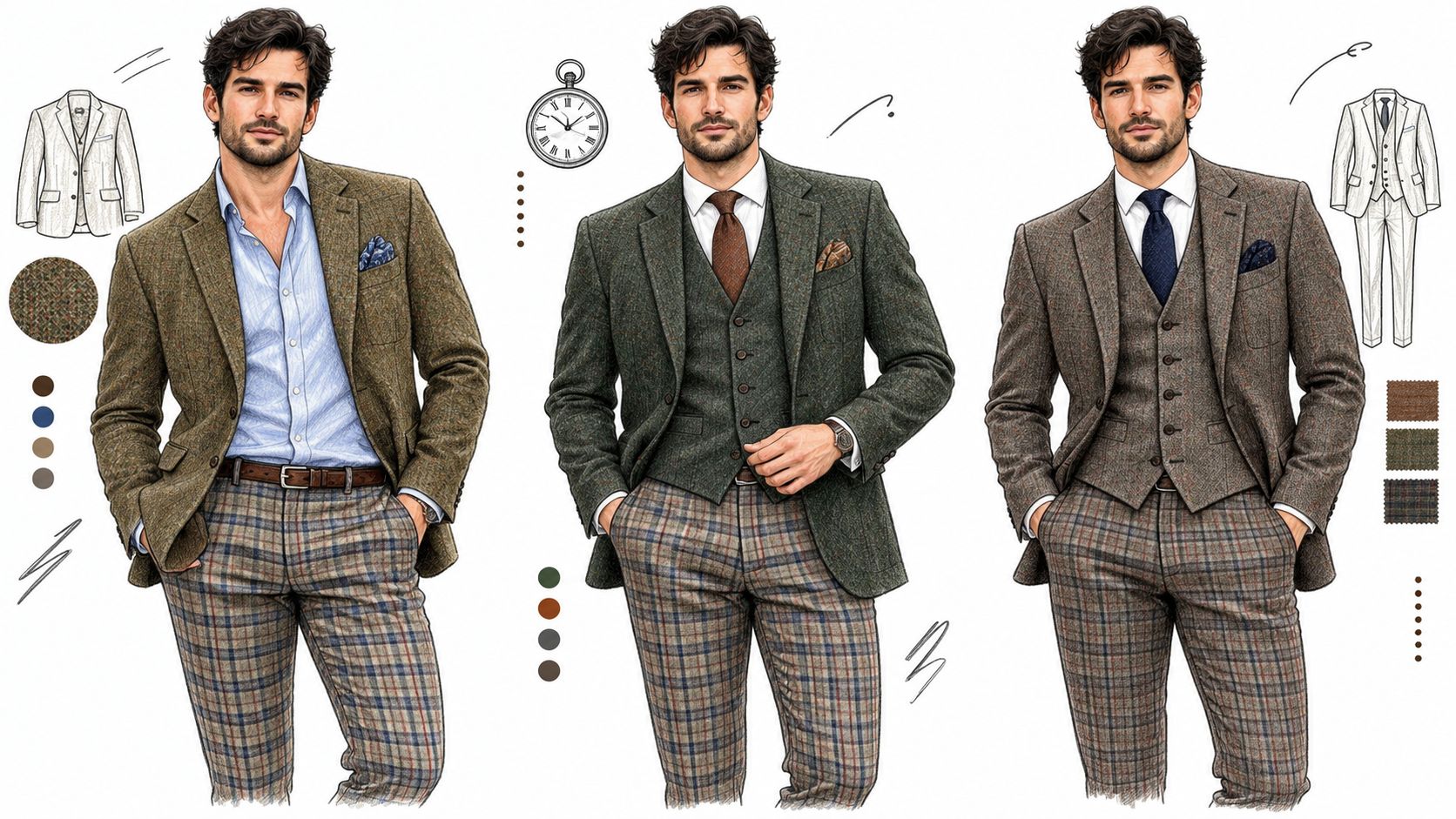
For a wedding, ceremony or formal dinner, a dark dress jacket creates a disciplined silhouette. Choose a smooth wool jacket if the trousers have a defined, formal check. The cleaner surface prevents the outfit from becoming visually noisy, and a plain shirt with a restrained tie keeps the focus at the right level.
A tweed jacket moves the outfit towards country tailoring and smart-casual dressing. It works particularly well when the trousers have a muted ground colour and a medium-scale check. The textures can complement each other, but the jacket should still have enough contrast to prevent the upper and lower halves from blending into one indistinct block.
A waistcoat changes the balance again. A plain waistcoat in navy, charcoal or a colour drawn from the tartan can bridge the jacket and trousers without adding another pattern. A tartan waistcoat in the same cloth creates a coordinated Highlandwear effect, while a contrasting tartan is more assertive and needs a calm shirt and jacket around it.
Practical rule: Match the jacket's visual weight to the trousers. A delicate lounge jacket can look insubstantial beside dense wool tartan, while heavy tweed can make a light summer-weight plaid appear lost.
For a blue-led outfit, a fitted waistcoat such as the blue tweed waistcoat for a suit can provide colour structure without introducing another loud pattern. Check the event dress code first, then decide whether the waistcoat should support a formal three-piece impression or a more relaxed layered look.
The following video is useful when you're comparing traditional Highlandwear proportions with modern jacket combinations.
Keep accessories deliberate. A pocket square that repeats one quiet colour from the trousers is enough. Avoid adding a patterned shirt, elaborate tie and prominent lapel decoration all at once. Plaid already supplies the outfit's strongest message.
Shoes anchor the lower half of a patterned outfit. They need enough substance to balance wool trousers without competing with the check. The best choice depends on whether you're wearing formal Highlandwear, traditional tailoring or a relaxed office combination.
For a ceremony or a deliberately Scottish outfit, ghillie brogues provide the clearest connection to Highland dress. Their open lacing and decorative perforations suit a formal tartan look, particularly when paired with a jacket, waistcoat and carefully finished hem. The deluxe leather ghillie kilt brogues are an example of the style to consider when the outfit calls for traditional footwear.
A medium or full brogue works well with heavier tartan because the perforations and leather construction have comparable visual density. Very delicate shoes can make the trousers look too dominant, especially when the hem is wide or the cloth is substantial.
For a smart-casual office outfit, dark brown derbies are versatile and less ceremonial than ghillie brogues. Oxblood can work with navy, green and brown checks, but check the dominant colour before committing. Black leather gives a sharper, more formal effect and suits charcoal-led or monochrome tartans.
Loafers offer a cleaner, lighter alternative for a shorter jacket and a restrained plaid. They work best when the trouser hem is neat and the cloth isn't overly heavy. Suede can soften the outfit, although it needs more careful weather management in the UK.
The lacing should look intentional rather than loose and decorative for its own sake. Wear socks that extend comfortably above the shoe and avoid a bare ankle, which can make a wool tartan trouser look abruptly casual. A clean hem and a shoe with a defined toe will keep the entire silhouette grounded.
Plaid trousers aren't a universal replacement for chinos or plain wool trousers. They're a seasonal, occasion-led purchase, and that's part of their appeal. UK-facing trend coverage describes plaid as resurfacing in 2025 and 2026 alongside renewed interest in classic, functional menswear. Google-trend-based commentary also notes that men's trouser searches rise in autumn and early winter, with interest peaking around November, as reported by UK high-street fashion trend coverage.
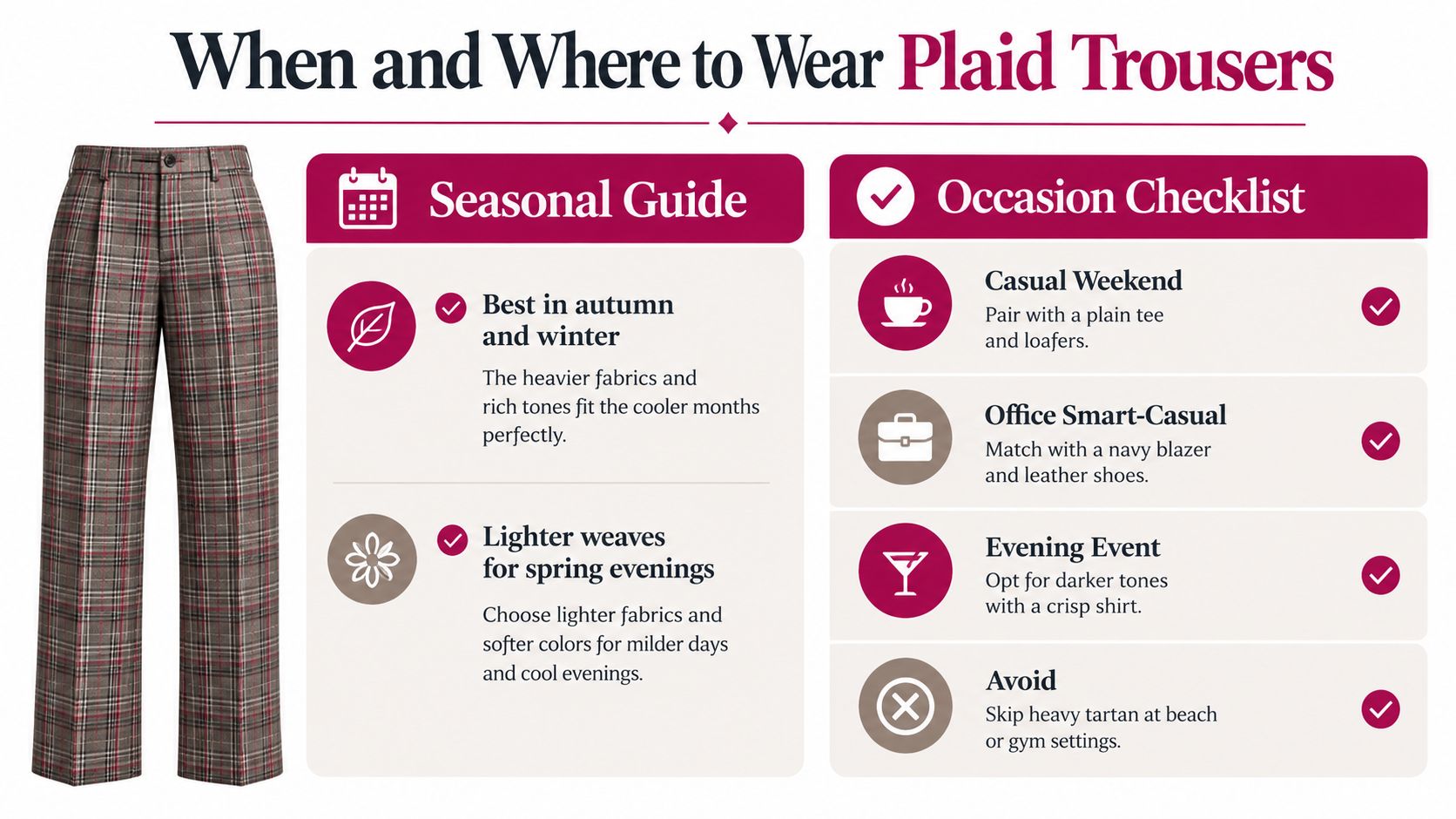
Formal events are the easiest place to make a strong tartan feel intentional. Choose a darker ground, a well-structured jacket and formal shoes for a ceremony or evening event. If the occasion has a Scottish or Highlandwear connection, a waistcoat and ghillie brogues can complete the language of the outfit without needing additional pattern.
Smart-casual offices call for restraint. A navy blazer, plain shirt and leather shoes allow the trousers to function as the statement piece. Select a quieter check and avoid pairing them with a visibly patterned shirt unless your workplace has a relaxed dress culture.
Festive gatherings welcome richer colour and texture. Burgundy, forest green, navy and brown can sit naturally with winter knitwear and tweed. Keep the knit plain, though. A cable-knit jumper with a large check and a patterned scarf can overwhelm the outfit quickly.
Casual weekends work when the cut is relaxed but still structured. Try a plain knit, simple Oxford shirt or understated polo with loafers or clean leather shoes. Heavy tartan is less convincing at a beach, gym or very warm-weather setting, where the cloth and pattern fight the environment.
Spring evenings can suit a lighter weave, but the fabric should still hang cleanly. The most reliable use remains autumn through winter, when wool texture, darker colour and layered jackets feel natural rather than forced.
A good pair of plaid trousers earns its place by solving several problems at once. It gives a plain navy blazer more character, provides a credible foundation for Highlandwear and offers a stronger alternative to another pair of neutral chinos. That only happens when the trousers fit properly and the cloth is comfortable enough to wear for a full day.
Choose the tartan after considering where you'll wear it, not just which pattern looks striking on a screen. Ask for the finished measurements, confirm the rise and inside leg, and pay attention to lining. A made-to-measure option is particularly useful when your waist, seat and leg proportions don't align neatly with standard sizing.
Care protects the investment. Air wool trousers between wears, steam rather than flatten the surface with a hot iron, and hang them from the waistband or a properly shaped trouser hanger. If you're building a fitted wardrobe, this guide to the best trouser hangers for tailors offers practical advice on supporting the garment without creating unwanted creases.
A strong tartan doesn't need constant styling. It needs the right fit, enough room to move and a simple outfit around it.
The man hesitating in front of his wardrobe can make the decision easier by starting with one versatile pair: medium-weight wool, a controlled check, a clean hem and a dark jacket. From there, the garment becomes less intimidating. It becomes a dependable piece of refined clothing with Scottish character and a clear place in modern UK dressing.
For made-to-measure tartan trousers, traditional trews, jackets, waistcoats and Highlandwear accessories, visit Kilts4Less to explore bespoke and off-the-peg options. Use the available sizing guidance and tartan selection to build a properly proportioned outfit for your next wedding, ceremony or smart-casual event.

Kilts4Less is Scotland’s best bespoke, handmade kilt and highlandwear company since 1983.
Specialists in made-to-order handmade kilts, kilt jackets, sporrans & also Scottish, Irish / American Tartan Hybrids. Don’t settle for cheap alternatives – Buy Online at Kilts4Less – sale is now on!
Easy 30 days returns
30 days money back guarantee
100% Secure Checkout
PayPal / MasterCard / Visa